Teefun local team
Sun, Heat & Surf Safety in Agadir: The Short Answer
Most sun and surf issues in Agadir are preventable rather than treatable after the fact: heat exhaustion is avoidable with real hydration and shade breaks, and most reef cuts and sea urchin stings come down to what’s on your feet. The one thing worth knowing cold, though, is the difference between heat exhaustion and heat stroke — the first you can manage yourself, the second needs immediate medical attention.
Heat Exhaustion vs Heat Stroke: Know the Difference
| Sign | Heat Exhaustion | Heat Stroke |
|---|---|---|
| Sweating | Heavy sweating | Sweating stops |
| Skin | Cool, clammy | Hot, dry or flushed |
| Body temperature | Usually below 104°F (40°C) | 104°F (40°C) or higher |
| Mental state | Dizziness, headache, weakness | Confusion, agitation, possible loss of consciousness |
| What to do | Move to shade, hydrate, rest, cool the body | Call for emergency medical help immediately |
According to the CDC, heat exhaustion typically presents with heavy sweating, paleness, dizziness, nausea, and a fast weak pulse — uncomfortable, but manageable by getting out of the heat, hydrating, and resting. Left untreated, it can progress to heat stroke, where the body’s cooling mechanism effectively fails: sweating stops, skin turns hot and dry, and confusion or loss of consciousness can follow within 10–15 minutes of onset. Heat stroke is a genuine medical emergency — this is the point to call for help, not push through.
Practical Heat Prevention for a Beach or Surf Day
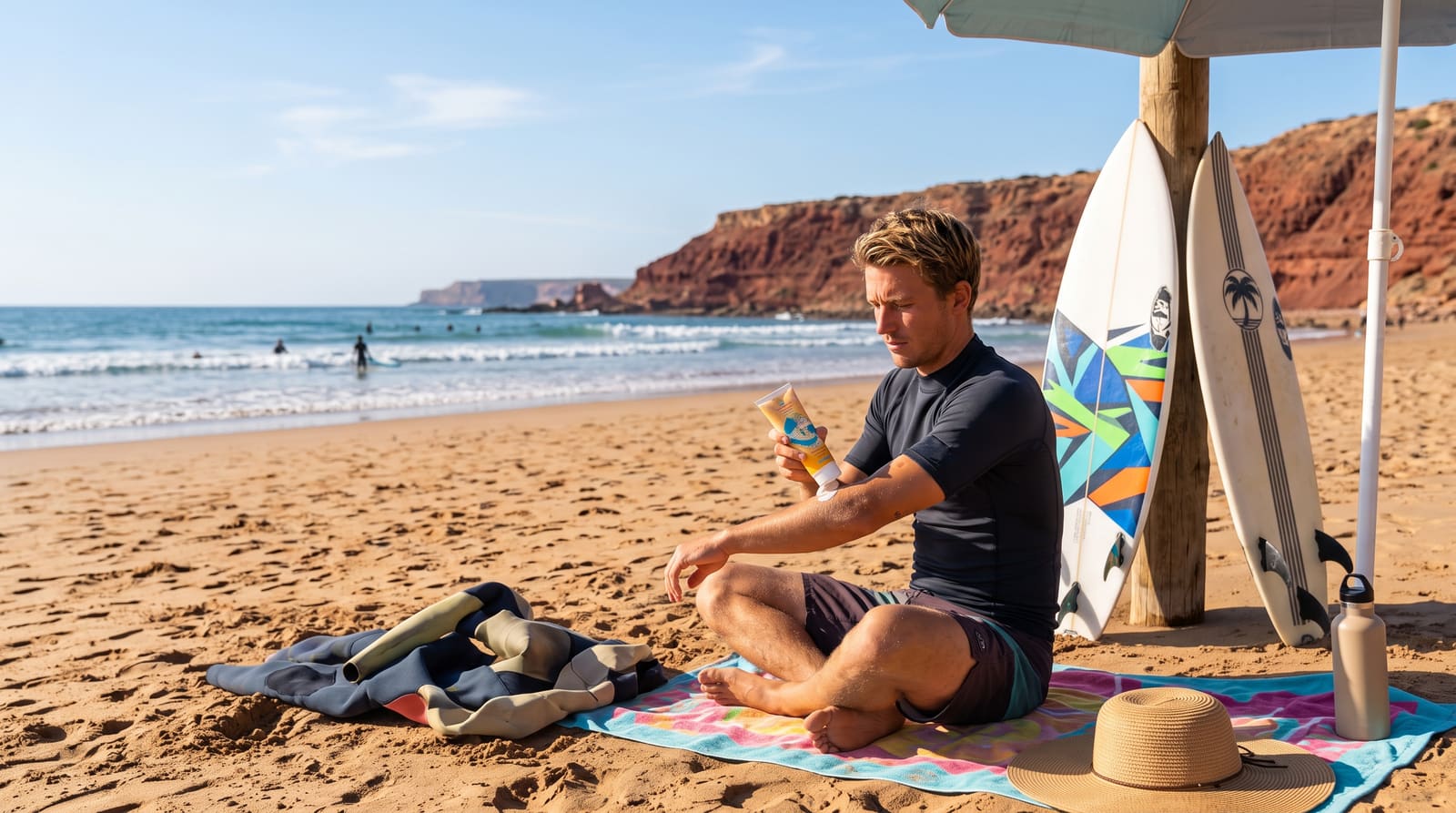
Agadir’s dry heat and near-constant sun make dehydration easy to underestimate, especially during a full day of surfing or beach time. Drink water on a schedule rather than waiting for thirst, since thirst is already a mild dehydration signal, not an early warning. On long beach days, plain water isn’t always enough — a pinch of salt in water or an electrolyte tablet supports real rehydration better than water alone, particularly if you’re sweating heavily or spending hours in the sun. Reef-safe sunscreen, a hat, and a genuine shade break in the middle of the day do more for heat prevention than any single hydration trick.
Reef Cuts: What to Actually Do
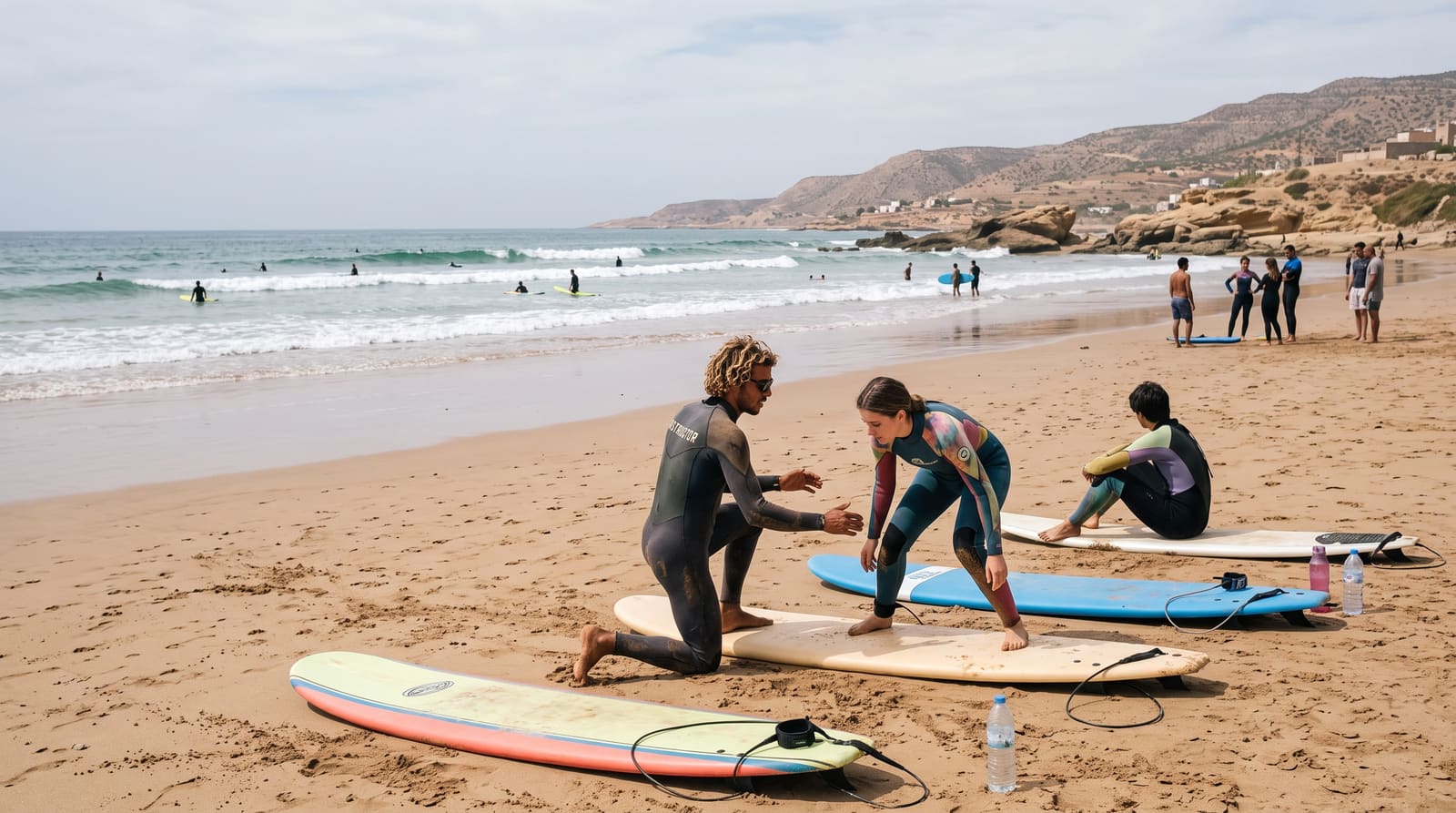
Taghazout’s rockier breaks mean reef cuts and scrapes are a routine part of surfing here, not a rare mishap. Clean the wound with fresh water as soon as you’re out of the ocean, remove any visible debris, apply an antiseptic, and keep it covered and dry while it heals. The detail that matters most: a cut that starts looking worse a day or two in — spreading redness, increasing swelling, heat around the wound, or pus — needs a clinic visit rather than a wait-and-see approach. Saltwater cuts can look fine initially and still develop infection over the following days.
Sea Urchin Stings: What Actually Works
If you step on a sea urchin, the effective first aid is a hot water soak — around 40–45°C (104–113°F), as hot as tolerable without scalding — for 30 to 90 minutes, which helps with both pain and the venom itself. This is different from the old advice about vinegar, which more recent guidance from marine safety organizations doesn’t support and which can worsen irritation. Remove any spines that are visibly protruding using tweezers, but don’t dig for ones that have broken off below the skin — those are better handled by a clinic than by fishing around at home. Reef booties are the simplest prevention here, and worth packing if you know you’ll be surfing over rockier sections.
When to Get Real Medical Care
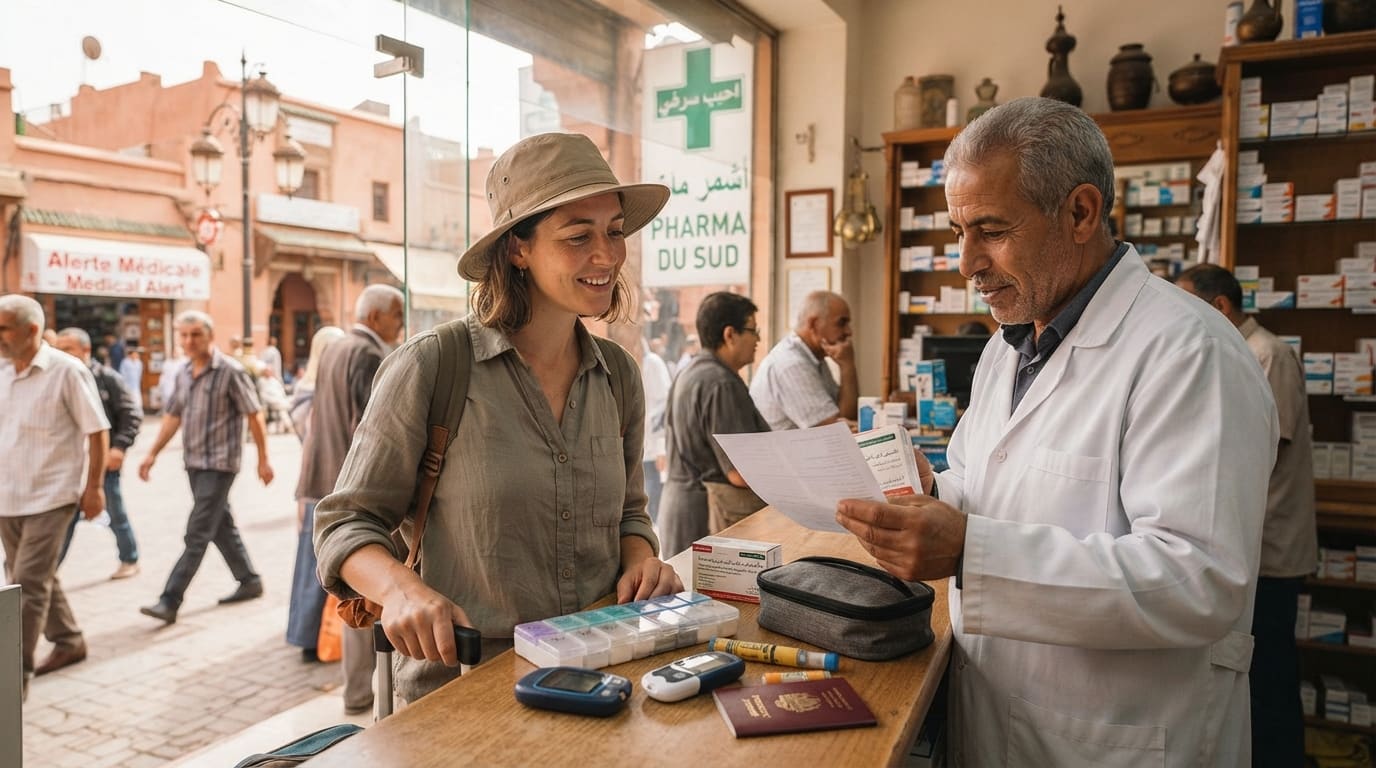
Most sun and reef-related issues in Agadir resolve with the self-care above. See a clinic if: a cut shows signs of infection rather than normal healing, sea urchin spines remain embedded after a reasonable attempt to remove them, or anyone shows signs of heat stroke rather than heat exhaustion. See our guide to pharmacies and emergency care near Agadir for exactly where to go.
Plan surf sessions and beach days with the heat in mind. Teefun’s free app builds your Agadir and Taghazout itinerary around your actual plans, including realistic timing for peak sun hours. Download Teefun free.
Conclusion
Most heat and surf-related issues in Agadir come down to prevention: real hydration, shade breaks, and reef booties if you’re surfing rockier breaks. The one thing worth memorizing before you need it is the line between heat exhaustion (manageable yourself) and heat stroke (a medical emergency) — everything else here is standard first aid you can handle with a basic kit and a level head.
Frequently Asked Questions
How do I know if it’s heat exhaustion or heat stroke?
Heat exhaustion involves heavy sweating, dizziness, and nausea with body temperature usually under 104°F (40°C). Heat stroke is more serious: sweating stops, skin turns hot and dry, confusion sets in, and body temperature can exceed 104°F rapidly. Heat stroke needs immediate medical attention.
What’s the right first aid for a sea urchin sting?
A hot water soak at 40–45°C for 30 to 90 minutes, plus careful removal of any visible spines with tweezers. Avoid vinegar, which isn’t supported by current guidance and can worsen irritation.
How do I treat a reef cut from surfing?
Clean it with fresh water immediately, remove visible debris, apply antiseptic, and keep it covered and dry. Watch for spreading redness, swelling, or pus over the following days — that signals infection and needs a clinic visit.
Do I need reef booties for surfing in Taghazout?
They’re not mandatory everywhere, but worth it in the rockier breaks, where they meaningfully reduce the risk of both reef cuts and sea urchin stings.
How much water should I drink during a full beach day in Agadir?
Enough to drink before you feel thirsty, ideally on a schedule rather than reactively. On long, hot days, adding a pinch of salt or an electrolyte tablet supports real rehydration better than water alone.