Teefun local team
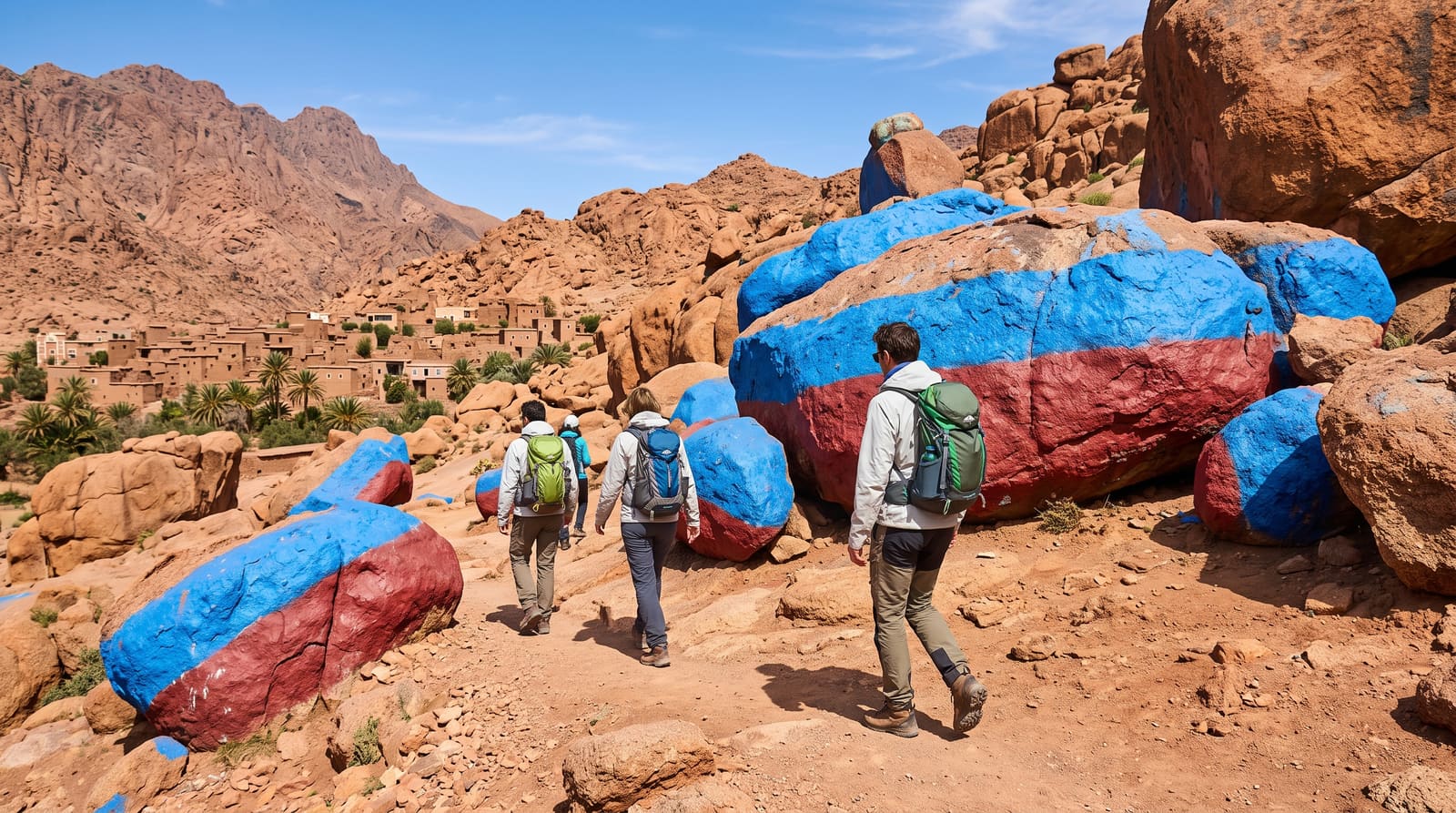
Hiking and Climbing in Tafraout: The Short Answer
Tafraout’s granite and quartzite landscape supports three genuinely different activities, and conflating them is the most common planning mistake. The Painted Rocks are an easy, family-friendly half-day walk. Jebel el Kest is a serious two-day mountain trek best done with a guide. And the rock climbing scattered across the Ameln Valley and the mountain’s north side is adventurous trad climbing aimed at experienced climbers, not a beginner sport-climbing crag. Deciding which of these (or which combination) you’re actually planning for shapes everything else, from how many days to budget to whether you need a car.
The Painted Rocks: An Easy Half-Day Walk
The Painted Rocks near the village of Agard Oudad are Tafraout’s most photographed attraction and its easiest hike. Belgian artist Jean Vérame painted the granite boulders in 1984 with the help of the local fire brigade and roughly 18 tonnes of blue, pink, red, and black paint — a strange, still-debated piece of land art that’s been repainted periodically as the colors weather. The walking route from Tafraout takes in Agard Oudad village, the naturally stacked rock formation known as Napoleon’s Hat, and the Painted Rocks themselves, and is manageable for most fitness levels in around half a day. No guide or technical gear is needed for this one.
Jebel el Kest: The Serious Trek
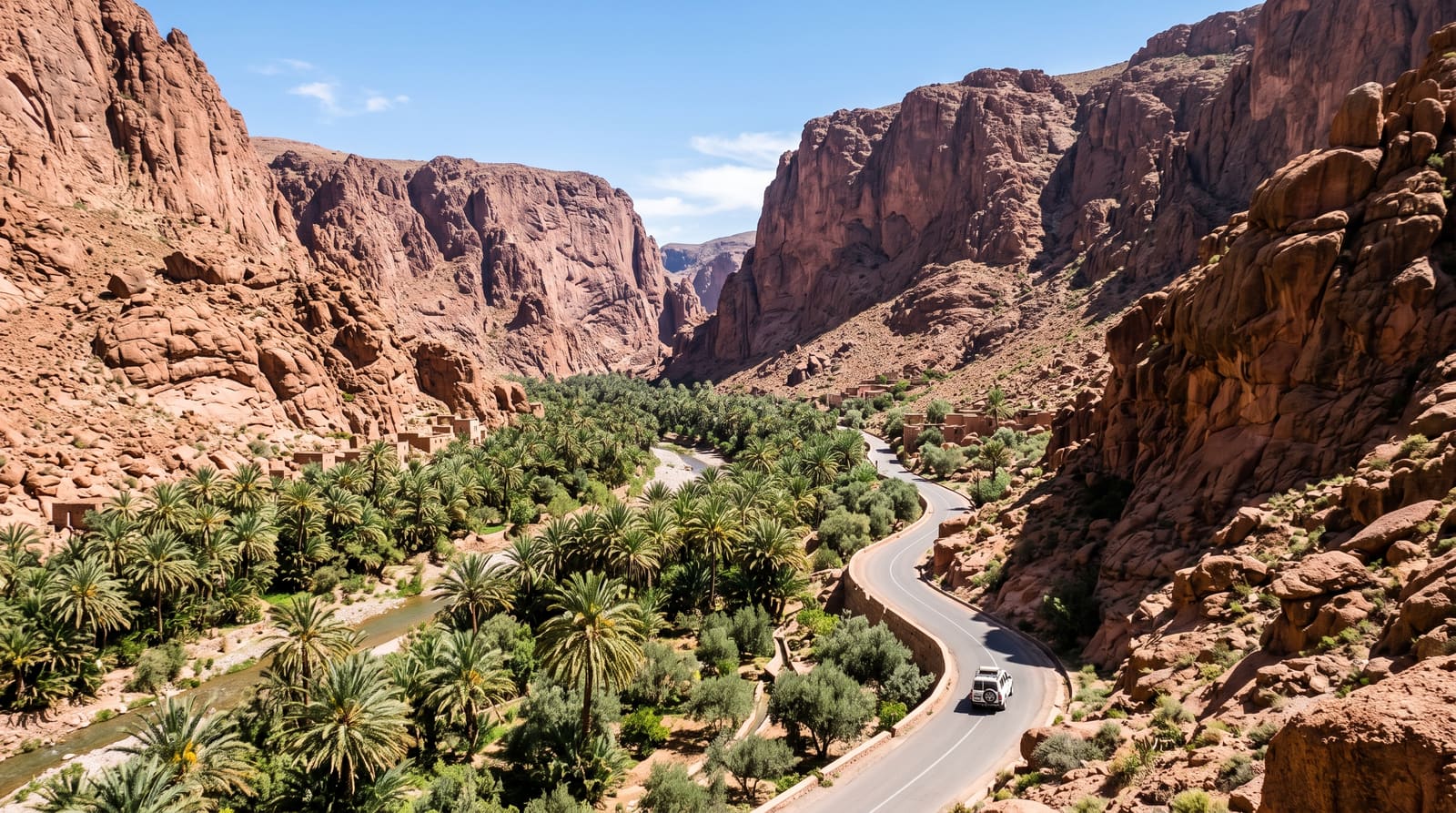
This is a different proposition entirely. Jebel el Kest, the highest summit in the immediate Anti-Atlas at roughly 2,359m, forms the dramatic northern wall of the Ameln Valley and draws hikers looking for a genuine mountain day, not a walk.
Two Routes Up
The more frequented eastern route starts from the village of Tagdicht and involves around 1,000m of vertical gain over roughly 4km — a long day on rough ground that doesn’t require technical climbing, but experienced walkers should still expect tricky route-finding. The western route via Anergui joins the same final ridge. Most people split the ascent over two days, with an overnight stop in Tagdicht or Anergui around 1,500m, taking in the mountain’s scale and the Berber villages along the way rather than rushing the summit in a single push.
Do You Need a Guide?
For anyone without significant mountain experience, yes. The route isn’t always easy to find, and there’s no organized rescue service in this part of the Anti-Atlas — a genuinely different risk profile from a marked national park trail. Guides are easily arranged on arrival in Tafraout and can also run a faster one-day version, driving up to Tagdicht by jeep before continuing on foot.
Rock Climbing: What Kind of Climbing This Actually Is
Worth being direct about this: Tafraout’s climbing reputation is built on adventurous trad routes on quartzite, not a beginner-friendly sport crag with bolted lines. The area’s signature feature is the Lion’s Head rock face above the Ameln Valley, first climbed in 1995 and now home to routes including the roughly 2,500ft Great Ridge, graded Hard Very Severe. Napoleon’s Hat itself has climbing routes too, including the well-known Trafalgar Crack. Away from the big mountain faces, the granite boulders around Aguerd Oudad near the Painted Rocks have been a well-known bouldering destination since the 1960s, offering a lower-commitment option for climbers who want to sample the rock without a full trad rack.
Where the Climbing Happens
The south-facing cliffs above the Ameln Valley hold hundreds of routes across a long stretch of the mountainside, largely trad rather than sport. The north side of Jebel el Kest — areas like Idaougnidif, Afantinzar, and Samazar — holds most of the area’s big classic multi-pitch adventures, along with more remote valleys like Toudma that see very little traffic even in season.
Access: Car vs Bicycle
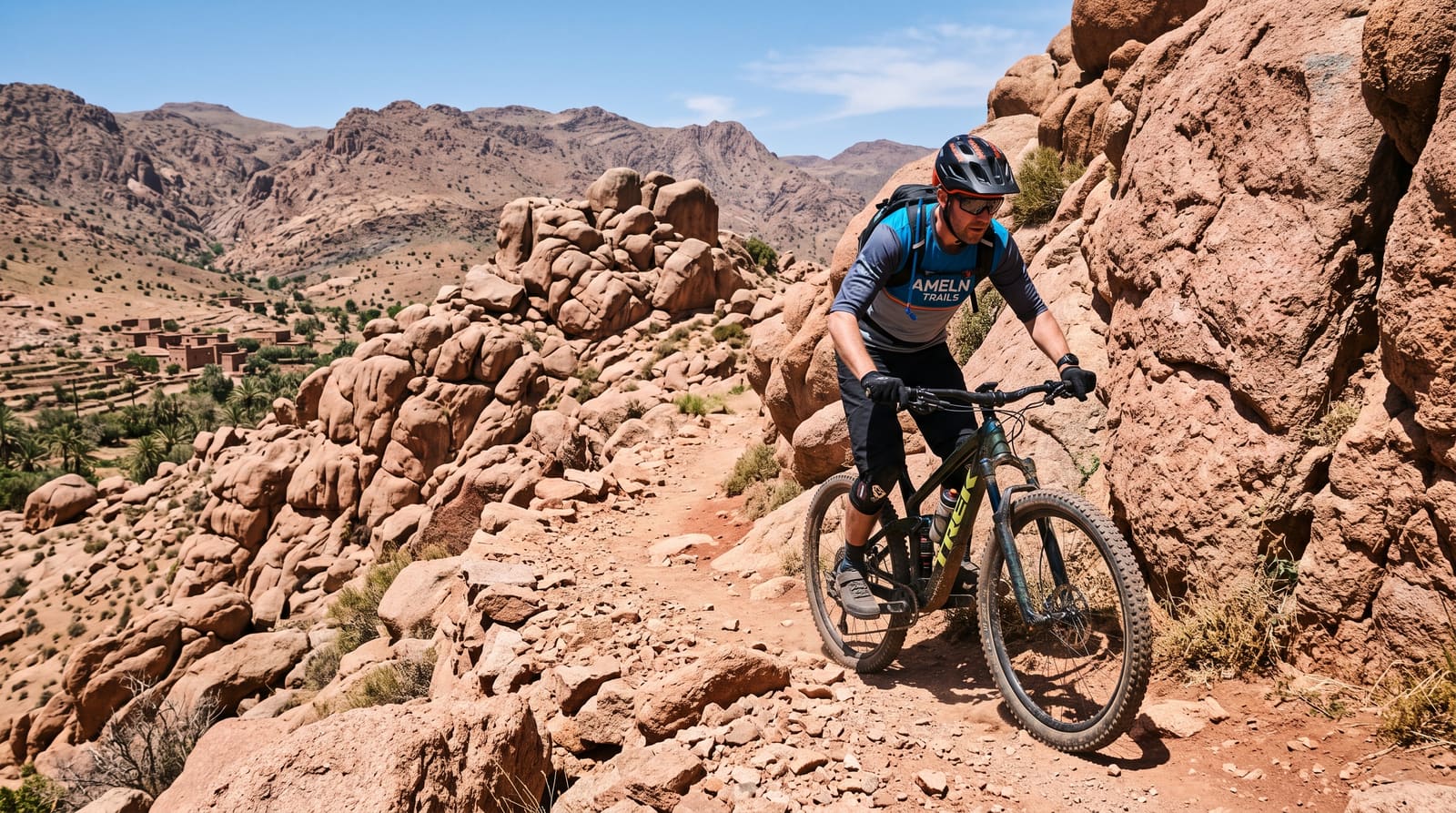
A rental car is close to essential for reaching the full range of climbing, particularly the north side’s classic routes, and is generally worth the cost for anyone serious about climbing here. A smaller selection of crags closer to Tafraout is reachable by bicycle, rentable locally from residents in town, for climbers without a car or wanting to keep logistics simple.
When to Climb
South-facing Ameln Valley crags get sun most of the day and suit the cooler winter months, roughly November through March. North-facing crags, by contrast, stay cold and shaded even in that same window, so route choice needs to account for aspect as much as season.
| Activity | Difficulty | Time | Guide Needed? |
|---|---|---|---|
| Painted Rocks walk | Easy | Half day | No |
| Jebel el Kest summit | Strenuous, non-technical | 1–2 days | Recommended |
| Bouldering at Aguerd Oudad | Variable, low commitment | Half day+ | Optional |
| Trad climbing, Ameln Valley/Jebel el Kest | Adventurous, experienced climbers | 1 day to multi-pitch epics | Depends on experience |
Practical Planning
Tafraout town is the natural base for all three activities, with Hotel Les Amandiers among the more established options for those wanting a comfortable base with mountain views. Detailed hiking guidebooks specific to the region are still limited, and climbers should look for the dedicated Tafraout climbing guidebooks covering the Ameln Valley and Jebel el Kest routes in more technical detail than a general travel guide can offer. Whichever activity you’re planning, arranging a local guide on arrival is straightforward and, for anything beyond the Painted Rocks walk, genuinely worth doing.
Sequence the easy walk and the serious trek separately. Teefun’s app builds your Tafraout stop around what you actually want — a half-day Painted Rocks walk, a full mountain day, or both on different days — rather than assuming one covers the other. Download Teefun free.
Conclusion
Tafraout’s landscape supports very different trips depending on what you’re after: a relaxed half-day for the Painted Rocks, a genuinely demanding two-day trek up Jebel el Kest, or serious trad climbing best left to those with the experience for adventurous, sparsely bolted quartzite routes. Match your plan to which of these you actually want, bring or hire a guide for anything beyond the easy walk, and budget the extra day if a rental car is going to open up the north side’s classic climbs.
Frequently Asked Questions
Do I need a guide to hike in Tafraout?
For the Painted Rocks walk, no, it’s an easy, well-trodden route. For Jebel el Kest’s summit, a guide is strongly recommended, especially for the route-finding and because there’s no organized rescue service in the region.
How long does it take to see the Painted Rocks?
About half a day on foot from Tafraout, including Napoleon’s Hat and Agard Oudad village along the way. It’s an easy, non-technical walk suitable for most fitness levels.
How hard is the hike up Jebel el Kest?
The easier eastern route from Tagdicht involves about 1,000m of vertical gain over roughly 4km and doesn’t require technical climbing, but it’s a long day on rough terrain with tricky route-finding. Most people split it over two days with an overnight stop.
Is the rock climbing in Tafraout suitable for beginners?
Not really. Almost all of it is adventurous trad climbing rather than bolted sport routes, which generally suits climbers with existing trad experience rather than complete beginners.
Do I need a car to go climbing near Tafraout?
A car opens up the north side of Jebel el Kest, home to most of the classic multi-pitch routes. A smaller selection of crags is reachable by bicycle, rentable locally in Tafraout, without one.